JBL L300 Summit
1975 - 1983
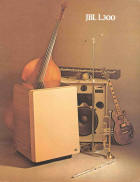
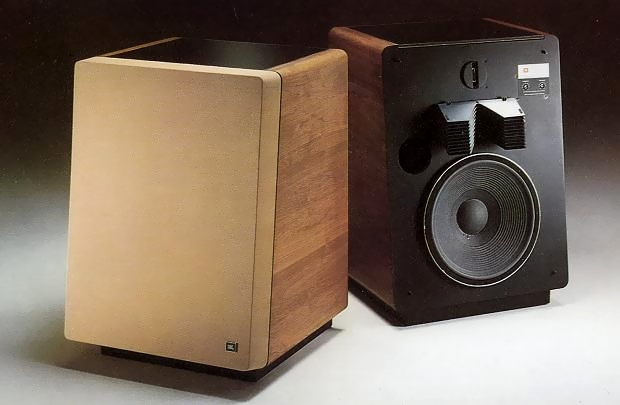
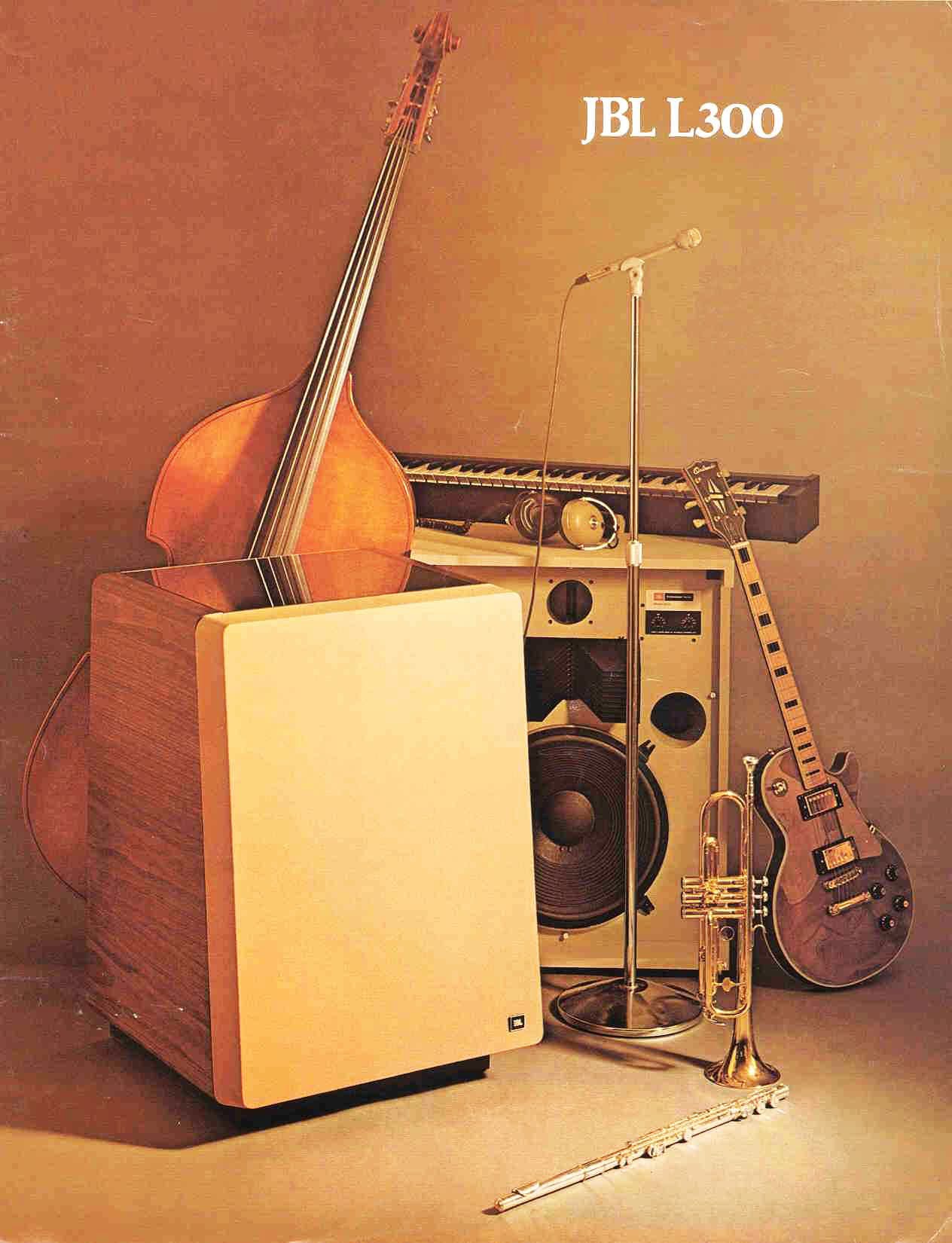
The L300 Summit was JBL's flagship home speaker of the 1970s, bringing professional studio monitor performance to the living room. Based on the legendary 4333 studio monitor, the Summit represented the pinnacle of JBL's consumer speaker engineering with its 15-inch woofer, compression driver, and iconic slanted baffle design.
Specifications
| Type | 3-way, 3-speaker, Bass Reflex, Floor Standing |
|---|---|
| Drivers | Woofer: 15" 136A, Midrange: LE85 + HL92 Horn, Tweeter: 077 Ring Radiator |
| Crossover Frequencies | 800 Hz, 8.5 kHz |
| Nominal Impedance | 8 Ω |
| Power Handling | 150W (continuous program) |
| Sensitivity | 93 dB/W/m |
| Frequency Response | 30 Hz - 20 kHz |
| Dimensions | 584 x 803 x 572 mm (W x H x D) |
| Weight | 66 kg (per speaker) |
Drivers Used
- Woofer: 136A - 15" (38cm) cone woofer with 4" (10.2cm) edgewound copper ribbon voice coil and 5.4kg Alnico V magnet
- Midrange: LE85 - 2" (5cm) throat compression driver with HL92 horn lens
- Tweeter: 077 - Ring radiator super tweeter
Design Philosophy
The L300 Summit was essentially a domesticated version of JBL's professional 4333 studio monitor. Every aspect of its design prioritized accuracy and dynamic range:
- Slanted Baffle: The angled front panel positioned all drivers in optimal time alignment for the listening position
- 136A Woofer: Ribbed corn paper cone with massive Alnico V magnetic circuit delivered authoritative bass with rich sense of volume
- LE85 Compression Driver: Provided exceptional midrange clarity and dynamics through the HL92 horn
- 077 Ring Radiator: Extended high frequency response with wide dispersion
- Smoke De Grasse Top: Elegant smoked glass top panel added furniture-grade aesthetics
Variants
- L300 Summit (1975-1983): Original version with walnut finish
- Grille Options: Four color variations available
Historical Context
Introduced in 1975, the L300 Summit quickly became one of the most successful loudspeaker designs JBL produced for the recording industry and serious audiophiles. It bridged the gap between professional studio monitoring and home high-fidelity, offering consumers the same drivers and crossover technology used in recording studios.
The Summit required a powerful amplifier and careful room placement to perform at its best, but rewarded with effortless dynamics, authoritative bass extension to 30Hz, and the kind of transient accuracy that only compression drivers can provide. It remained in production for eight years, testament to its enduring design.
Related Models
The L300 Summit shared its DNA with the L200 Studio Master and the professional 4333 studio monitor. The 077 tweeter was also used in the L65 Jubal. The Summit was succeeded by the L250 as JBL's flagship consumer speaker.